Club History
Our Roots: Indian Lake Before the Yacht Club
To appreciate the history of the Indian Lake Yacht Club (ILYC), it helps to first understand the history of Indian Lake itself. What we know today as Indian Lake began as six small lakes connected by marshland, roughly 640 acres of swamp. The three largest were Indian Lake, Bear Lake, and Otter Lake.
In 1850, the Commissioners of the Miami–Erie Canal voted to create feeder reservoirs to support canal operations. Irish laborers constructed a bulkhead from the current spillway to Lakeview, completing the work in 1860. The result was the Lewistown Reservoir, created to feed the Sidney Connector of the canal system.
The Lewistown Reservoir covered 6,300 acres, featured 29 miles of shoreline, and included 46 islands. It was famous for exceptional fishing and hunting—and for boating that could be both thrilling and hazardous, much as it can be today. When the canal system declined, the Ohio General Assembly voted in 1890 to designate the reservoir as a Public Recreation Area and officially renamed it Indian Lake.
The Resort Era: Indian Lake Comes Alive
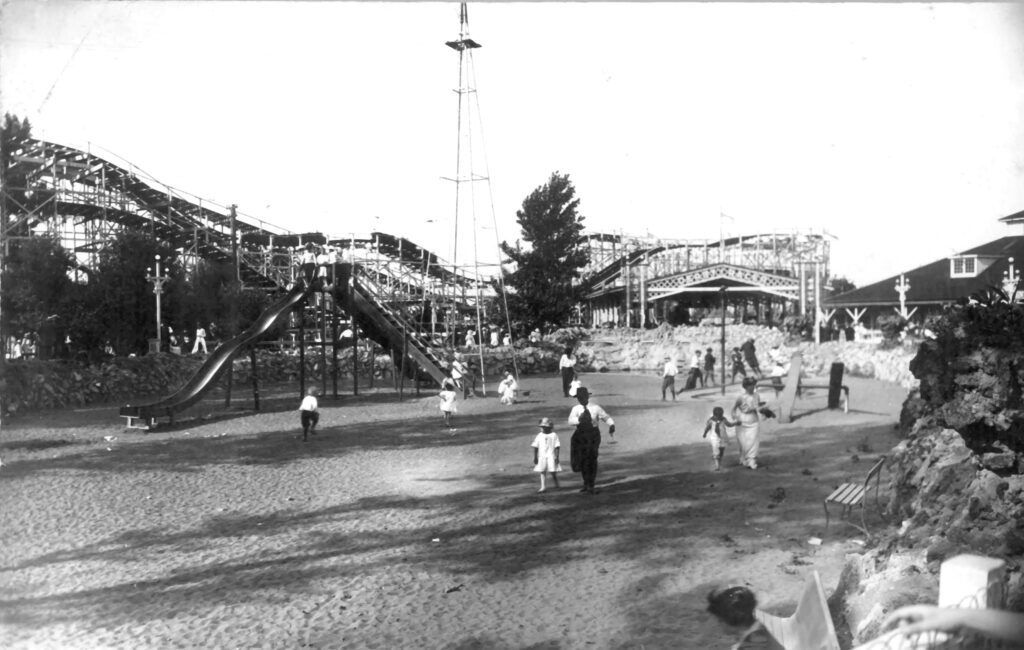
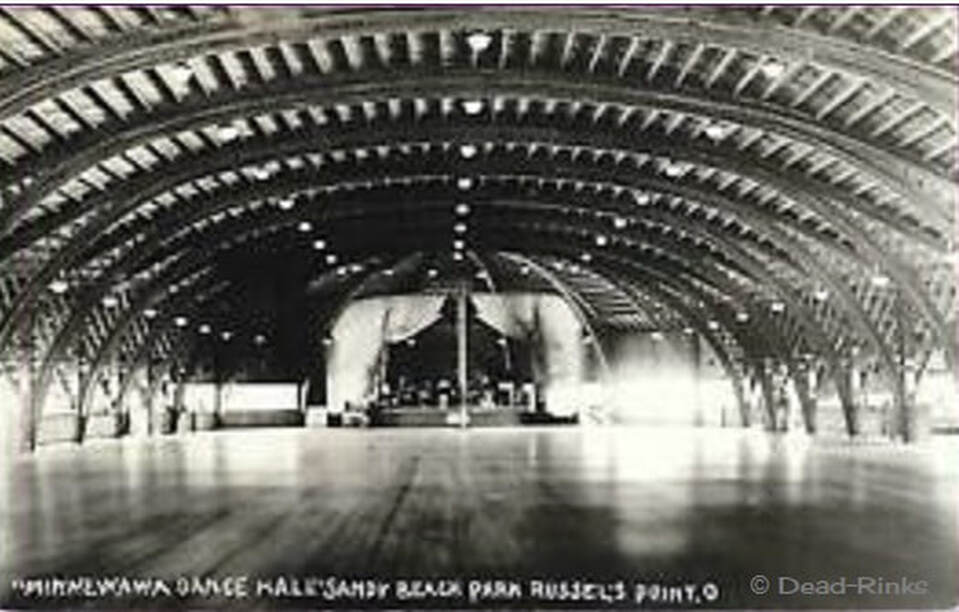
By the early 1900s, Indian Lake had become easily accessible. The Ohio Electric Line provided rail service to Russells Point, and in 1911, Lakeview became a scheduled stop on the Toledo & Ohio Central Railroad. Tourism boomed. By the mid‑1920s, the lake was ringed by 21 hotels and resorts, including the legendary Sandy Beach Amusement Park (opened 1924). Its Minnewawa Dance Hall drew big bands from across the country. Traveling Chautauqua Assemblies entertained crowds at the Wicker Hotel pavilion, while Beatley’s Hotel became a favorite destination.
Popular gathering places included Pickering’s Restaurant, Lois Ann’s Tavern, Antonio’s Restaurant (with its colorful mob‑era lore), the Bulkhead Bar, and the Ark Restaurant—famous for its turtle soup. Hundreds of thousands of visitors flocked to Indian Lake each summer.
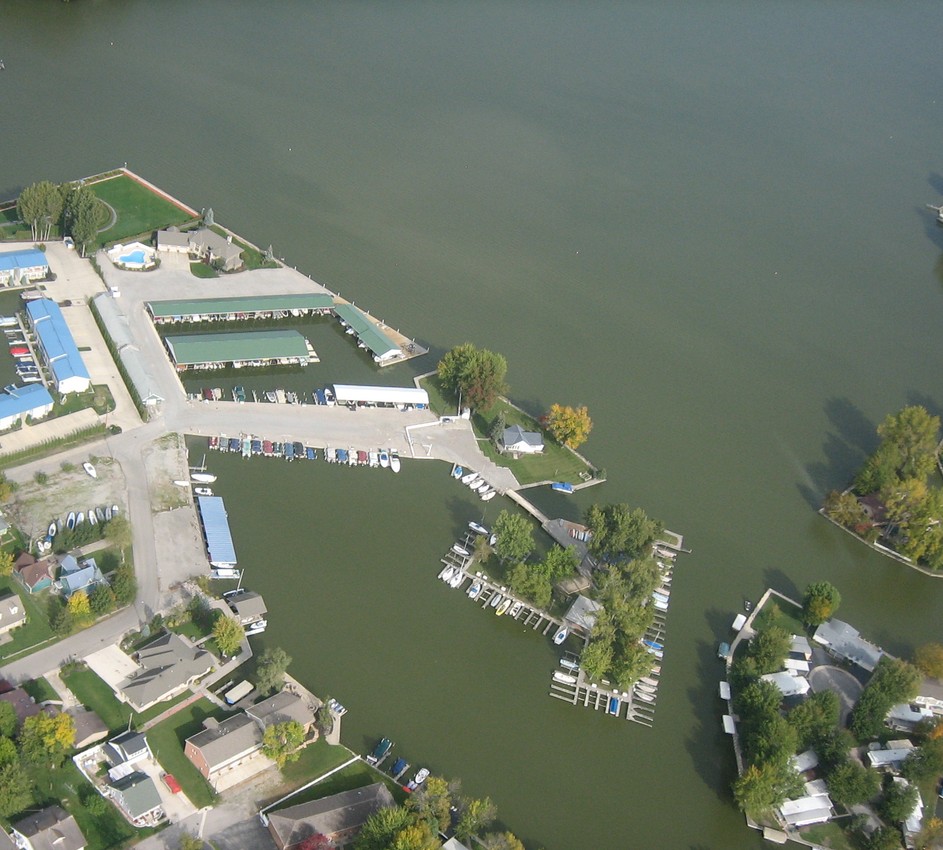
To improve boating safety and access, the State undertook extensive dredging projects, cutting canals and waterways to villages, hotels, and amusements. One such dredging effort created a channel to Beatley’s Hotel—and left behind a large dredge pile that would later become home to the Indian Lake Yacht Club.
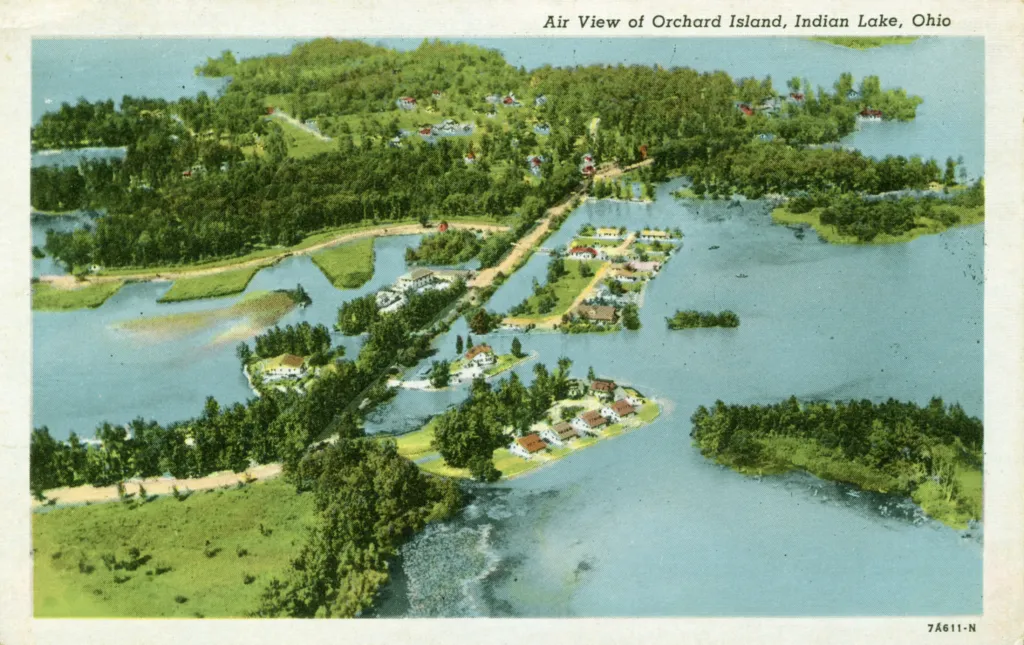
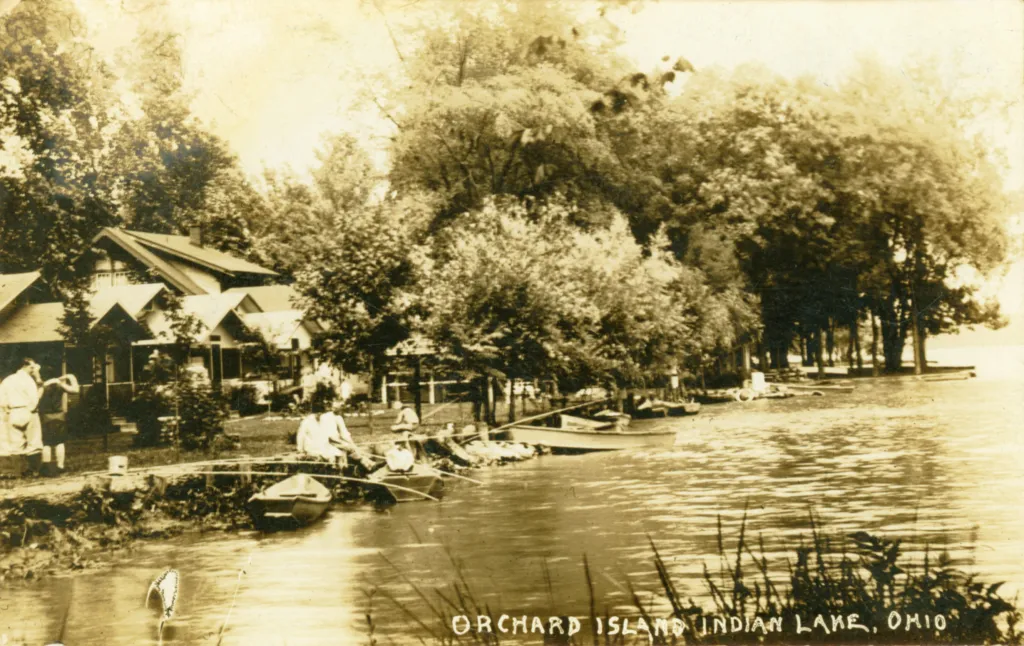
Orchard Island & the Birth of Organized Sailing
As Indian Lake’s popularity grew, many visitors built summer cottages. Among them was Lewis J. “Lou” Zerbee, a businessman and inventor from Bellefontaine. Lou and his wife Elizabeth built a cottage at the end of Elm Street on Orchard Island.
Lou was a seasoned sailor—and sailors tend to attract other sailors. Before long, the Orchard Island Sailing Club (OISC) was formed. Members included names still familiar to ILYC history: Carl Blackburn, Ted Siferd, Kenny Steiner, Herb Krase, and Chalmers Brown.
Racing was informal but spirited. Sailors launched wooden boats at the end of Elm Street, paddled around the point to the Zerbee dock, agreed on a course, and even placed friendly wagers. A rowboat served as the race committee boat, and the starting cannon was a 12‑gauge shotgun fired into the air.
1942: The Indian Lake Yacht Club Is Formed
After a decade, the Orchard Island Sailing Club outgrew its home. Attention turned to the cottonwood‑covered dredge pile on the south shore. In February 1942, the OISC leased this land from the State, and the Indian Lake Yacht Club was born. Annual membership dues were one dollar.
Members leveled the island, built docks, installed an outhouse, and constructed simple wooden shacks for race headquarters and a kitchen. Members rowed out in summer and walked across the ice in winter. Life on the island was good.
In June 1945, under Commodore K. J. Steiner, the club incorporated as Indian Lake Yacht Club, Inc. The Articles of Incorporation defined the mission clearly: “To promote sail and motor boating on Indian Lake, Ohio.”
Continued dredging expanded the island, and in 1947 a new lease doubled its size to just over half an acre.
Building a Permanent Home
ILYC’s first true clubhouse was constructed in 1948 on the site of today’s shelter house, complete with a wooden footbridge to the mainland (the Hinkle property). The building featured two square structures joined by a roofed breezeway—a favorite gathering spot. Over time, the breezeway was enclosed, a fireplace added, and the building expanded. It remained in use through the club’s 50th anniversary in 1992, before eventually being lost to termites.
In 1949, Indian Lake became one of Ohio’s first State Parks under the newly formed Ohio Department of Natural Resources.
A major milestone came in October 1959, when Governor Michael V. DiSalle granted ILYC a Governor’s Deed for the island for $5,606.66—securing the club’s permanent home.
Growth, Improvements & Legacy
Over the decades, the club continued to grow:
1960 – Locker Room (Heys’ Hall) built
1970 – Purchase of the Hinkle property (site of today’s clubhouse)
1971 – Construction of the concrete bridge
1979 – Purchase of the Brentlinger properties
1995 – Construction of the shelter house
2002–2003 – Causeway and seawall improvements
ILYC’s buildings honor past leaders:
Heys’ Hall – Bob Heys, Commodore 1957
Kintz’s Condo (Clubhouse) – John Kintz, longtime Interlake sailor
Joe Monnier Shelter House – Commodore 1965